

Persistent Deficiencies in Electronic Waste Management in Baja California Sur
- Aug 7
- 2 min read
Current Situation
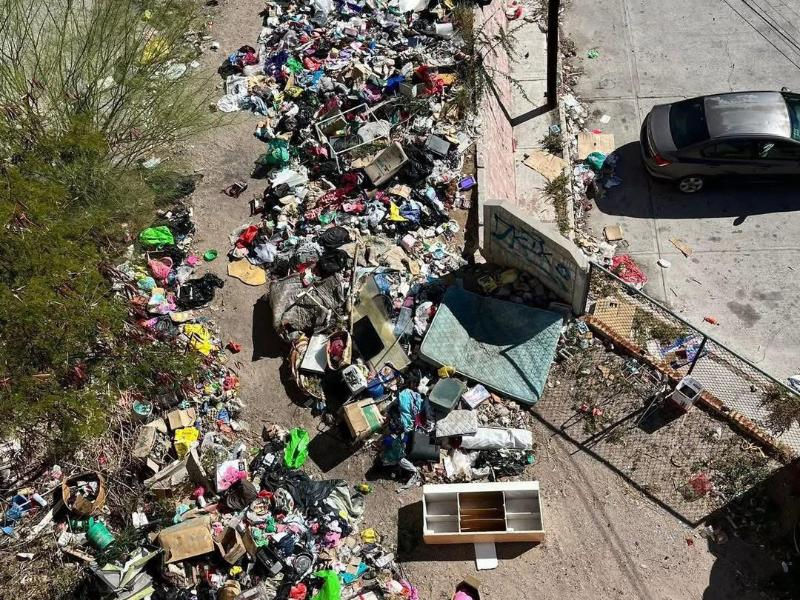
According to current legislation, the State Government must ensure the installation of collection centers for the proper disposal of electronic waste. However, the necessary infrastructure to address this type of waste is still lacking, a situation that worries specialists who warn that the absence of adequate spaces encourages the abandonment of electronic devices in clandestine landfills and vacant lots, posing a significant risk of environmental contamination.
The presence of clandestine landfills containing electronic waste and appliances in La Paz highlights the lack of infrastructure for the proper management of this type of waste. Specialists point out that the absence of specialized collection centers and limited inspection capacity favor the disposal of these materials in vacant lots, despite state legislation establishing guidelines for their disposal.
"The ideal is to have a collection center where these electronics can be delivered, and what they do is dismantle these electronics and recover the metals that can be reused,"
explained Mayra Gutiérrez, director of Ponguinguiola.
The Risks of Inadequate Disposal
Cell phones, televisions, refrigerators, and other electrical appliances require specialized treatment due to the materials and substances they contain. Their management involves collection at authorized collection centers, dismantling to separate metals, plastics, and circuits, neutralization of hazardous components such as refrigerant gases and lead, as well as recycling of reusable materials for the manufacture of new products.
Gutiérrez also noted that a common practice is to abandon these wastes in open spaces.
"What usually happens is that we leave it in the vacant lot; here nobody sees me, nobody suspects, nobody knows, and that’s where they are placed. Some people bring them closer, but they don’t leave them specifically,"
she indicated.
Despite the implementation of the Ruta Cero program by the La Paz City Council two years ago, which has recovered over 43.3 tons of recyclable waste through containers installed in various city locations, the program's coverage focuses on materials such as cardboard, paper, plastic, aluminum, glass, and other recyclable waste. Consequently, electronic devices still lack a permanent collection and specialized treatment system.
Legislative Framework and Challenges
The Law of Ecological Balance and Protection of the Environment of the State of Baja California Sur establishes, in articles 73 to 77, that state and municipal authorities must consider the installation of permanent containers for the deposit of electronic waste in specific locations, in addition to ensuring their management in accordance with NOM-161-SEMARNAT-2011.
However, Gutiérrez believes that the application of these provisions faces limitations due to the lack of supervision.
"So the regulation and inspection are minimal. Unfortunately, this responsibility lies with the State Government, but there is no inspection capacity to implement this; therefore, electronics come and go. Yes, there are collection centers, but they do not always receive the total amount of electronics,"
she stated.
Although the regulatory framework includes mechanisms for the management of electronic waste, specialists warn that the lack of infrastructure and oversight keeps the problem alive in Baja California Sur. As a result, these devices continue to end up in clandestine landfills and vacant lots, where they pose a contamination risk due to the hazardous materials they contain.


Comments